 Obolon
 +38 (067) 465 06 00


Braces On Obolon
What it is
Braces are a fixed orthodontic system of brackets bonded to the teeth and an archwire that connects them. The wire applies constant gentle pressure, and over months of treatment the teeth move into the correct position.
At VILIDA in Obolon, Kyiv, we fit five types of braces — from metal to lingual braces that are invisible from the outside. Treatment is led by an orthodontist: before fitting we do diagnostics in the clinic, choose the system for your bite and explain how long treatment will take and what the cost is made of.
-
from 14 500 UAH
metal braces for one jaw
-
5 types
metal, ceramic, sapphire, self-ligating, lingual
-
Up to 2 years
from a few months, depending on the bite
-
X-ray and CT
diagnostics before braces — in the clinic
How braces work
A bracket is bonded to each tooth. A shape-memory archwire is placed in the bracket slots: it tends to return to the correct shape of the dental arch and gradually pulls the teeth along with it. Treatment starts with a thin flexible wire and moves on to thicker, stiffer ones.
The wire is held in each bracket by small elastic ligatures or, in self-ligating braces, by a built-in clip. To correct how the upper and lower jaws meet, the doctor sometimes adds elastics between the jaws. A tooth moves slowly: bone dissolves on one side of it and builds up on the other, which is why treatment takes months.
Types of braces
All braces straighten teeth on the same principle; they differ in bracket material, how visible they are and how the wire is held.

| Type | What it looks like | Who it suits |
|---|---|---|
| Metal | Steel brackets and wire, visible on the teeth | Teenagers and adults, including complex cases; the most affordable |
| Ceramic | Tooth-coloured brackets, a thin metal wire | Adults who want braces to be less noticeable |
| Sapphire | Clear brackets with the enamel visible through them | Those who want almost invisible braces on white teeth |
| Self-ligating | Brackets with a clip, no elastic ligatures | Teenagers and adults; the wire slides with less friction |
| Lingual | Brackets on the inner side of the teeth | Adults whose braces must not be visible at all |
How to choose braces
The orthodontist chooses the type of braces together with you after diagnostics. Usually several things are weighed:
- Budget. Metal braces are the most affordable, lingual ones the most expensive: they are harder to make and fit.
- Visibility. Ceramic and sapphire braces almost blend in with the teeth; lingual braces cannot be seen from the outside at all.
- Complexity of the bite. In complex cases the doctor more often recommends metal or self-ligating systems.
- Comfort. The tongue and speech take longer to adapt to lingual braces; ceramic brackets are slightly larger than metal ones.
- Care. Light-coloured elastic ligatures on ceramic and sapphire braces can stain from coffee, tea and wine.
Braces prices per jaw
The doctor confirms the final cost after the examination.
What the cost of treatment with braces includes
Braces are priced not per bracket but per system for one jaw. If both jaws are treated, the cost of the braces doubles. The full cost of treatment has several parts:
- orthodontist consultation and comprehensive diagnostics — photos, jaw models and X-rays;
- a brace system for one or both jaws — see the table above;
- follow-up visits with activation during treatment;
- braces removal;
- retention — a retainer tray or a fixed retainer after treatment.
Prices for these items are in the full orthodontics price list. The orthodontist prepares an exact estimate after diagnostics, once it is clear which system is needed and for how many months.
Who braces are for
When braces help
- Crooked or overlapping teeth
- Gaps between teeth
- Deep bite, open bite, underbite, overbite or crossbite
- Teeth need straightening before prosthetics or implants
When we treat first or postpone
- Cavities and gum inflammation — treatment and hygiene come first
- A flare-up of periodontitis
- A child whose permanent teeth have not come in yet — plates are used instead
- No possibility to clean the teeth thoroughly every day
Age is not a limit: braces are fitted for teenagers and adults alike. What matters more is that the gums and bone around the teeth are healthy — the doctor checks this during diagnostics.
How braces are fitted
-
Preparation
We treat cavities and do a professional cleaning; the orthodontist draws up a plan based on diagnostics.
-
Bonding
The teeth are polished and dried, the brackets are bonded with a special adhesive and the first thin wire is placed.
-
Getting used to them
The teeth ache from the pressure, and the cheeks and lips get used to the brackets. Soft food and orthodontic wax on brackets that rub help.
-
Adjustments
At follow-up visits the orthodontist changes the wires, activates the system and monitors how the teeth move.
-
Removal and retention
The brackets are removed, the teeth are polished and a retainer is fitted or a retainer tray is given to hold the result.
Living with braces
People get used to braces in a week or two. To keep treatment on track and brackets in place, follow a few rules:
- do not crack nuts, rusks or hard sweets, and do not chew toffee or gum;
- cut apples, carrots and corn into pieces instead of biting into them;
- brush after every meal: a brush with V-shaped bristles, interdental brushes between the brackets and, if you like, a water flosser;
- have professional cleanings more often — plaque builds up faster under braces.
How to care for your teeth with braces will be shown at your appointment: the hygienist will help choose the brushes and toothpaste.
Before and after treatment with braces
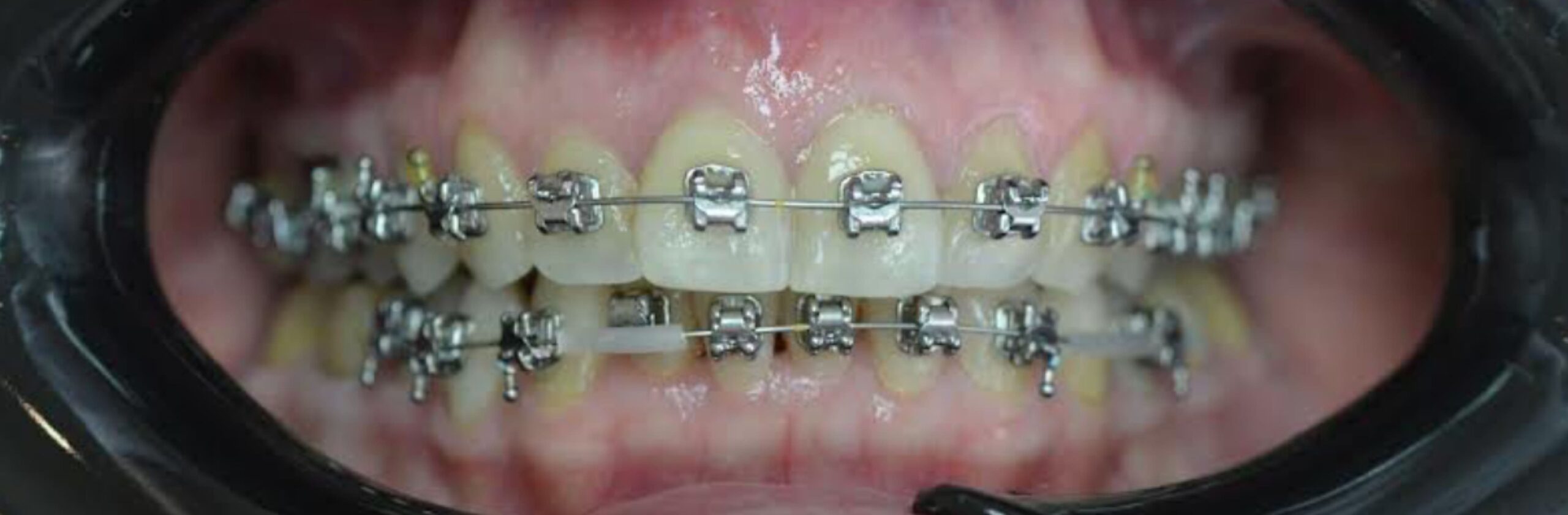
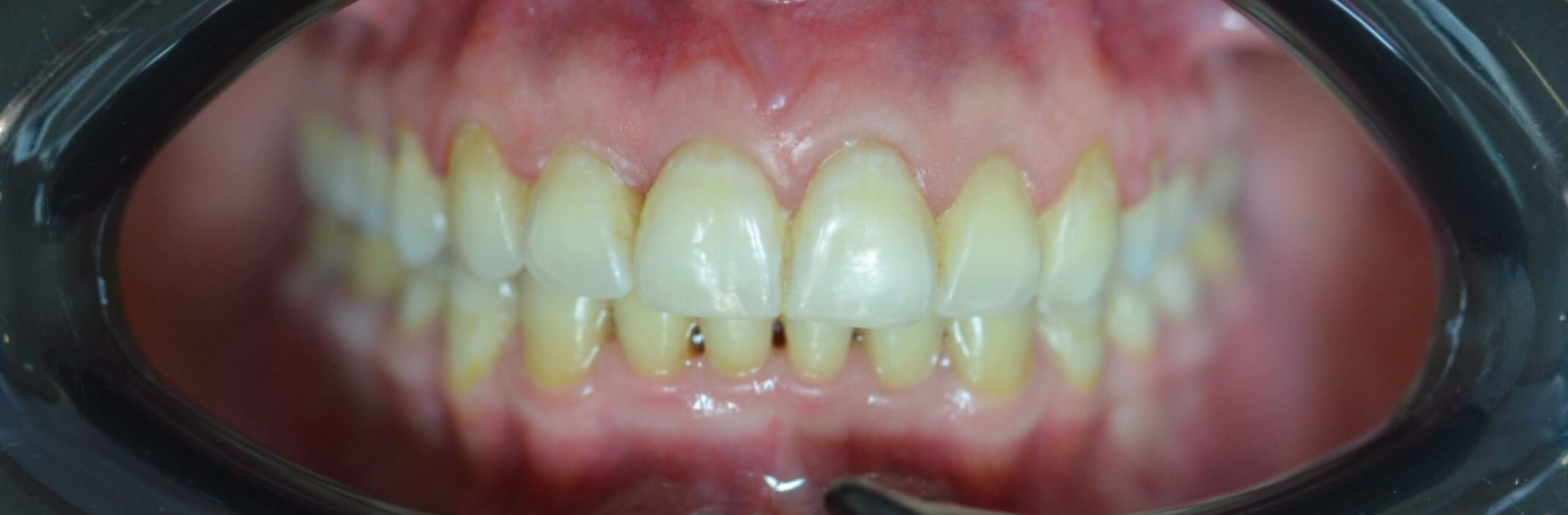


Braces or aligners?
Aligners are clear removable trays, but they have to be worn almost around the clock. Braces work without your involvement and cope better with complex cases. More about the clear option — on the aligners page.
Who fits braces


Questions and answers
Does it hurt to have braces fitted?
No: the brackets are bonded to the teeth without injections. For a few days after fitting, and after each activation, the teeth ache from the pressure — this is normal and passes on its own.
How long do you wear braces?
Minor tooth movement takes a few months; complex bite problems take up to a year and a half or two. The orthodontist gives the timeline after diagnostics.
Can I get braces at 30 or 40?
Yes. Teeth move at any age; in adults treatment just takes a little longer. Adults more often choose ceramic, sapphire or lingual braces — they are barely visible.
How much does one bracket cost?
Brackets are not priced individually: the price is per system for one jaw, from 14 500 UAH for metal braces. Diagnostics, follow-ups, removal and retention are added — they are listed above.
Do braces damage teeth?
Braces themselves do not spoil the enamel. The risk lies in hygiene: if plaque stays around the brackets for a long time, white spots and cavities appear. That is why we brush after meals and have professional cleanings more often.
Does the face change after braces?
When the bite is corrected, the profile, the lip line and the lower third of the face may change — differently for everyone. The orthodontist will explain what to expect in your case based on diagnostics.
Can I have an MRI with braces?
Metal braces can distort images of the head and neck. Before an MRI, tell the referring doctor — they will decide whether the braces will interfere with the scan.
What do you wear after braces?
A retainer — a thin wire on the inner side of the teeth — or a clear retainer tray at night. They hold the teeth while the bone around them remodels. How long to wear it is decided by the orthodontist.
Orthodontist consultation
Examination, bite assessment and choice of a brace system. Diagnostics are done in our clinic in Obolon.
from 14 500 UAHMetal braces, 1 jaw
+38 (067) 465 06 00Sign up for a free consultation today and start the path to a healthy and beautiful smile! *Service "Braces" provided in the Obolon clinic.


Роботу виконали якісно, результатом задоволена на всі сто! Дякую за турботу та гарне обслуговування. З радістю рекомендую!


*The consultation is free if you continue treatment at our clinic.


